South San Francisco famously known as the ‘Industrial City’ is a dynamic community of biotech campuses, busy commercial corridors, and residential neighborhoods situated just south of San Francisco and adjacent to SFO airport. Its unique combination of industrial traffic, airport proximity, and dense commuter patterns creates driving conditions where auto glass damage is a frequent reality. For South San Francisco vehicle owners, knowing the basics of Auto Glass Repair South San Francisco is a practical necessity.
Why South San Francisco Roads Create More Windshield Risk
The industrial character of South San Francisco means its roads see heavy truck and commercial vehicle traffic, which is a primary source of windshield chips and cracks. Large trucks frequently carry gravel, sand, construction materials, and industrial equipment all of which can become airborne and strike following vehicles. Airport roads around SFO also have unique debris profiles from ground support equipment and runway operations. Drivers on Bayshore Freeway and surrounding arterials should be especially aware of the windshield hazard risk in this area.
The Anatomy of a Safe Windshield
Understanding the structure of a windshield helps appreciate why even minor damage should be addressed promptly. A modern windshield is a laminated safety unit typically 4–6mm thick, comprising an outer glass layer, a PVB (polyvinyl butyral) interlayer, and an inner glass layer. The PVB interlayer is what gives laminated glass its safety properties it holds the glass together on impact, preventing penetration and retaining visibility even when the glass is cracked. The windshield also bonds to the vehicle body through a urethane adhesive, making it a structural component of the vehicle’s roll cage.
The Chip Repair Process: Step by Step
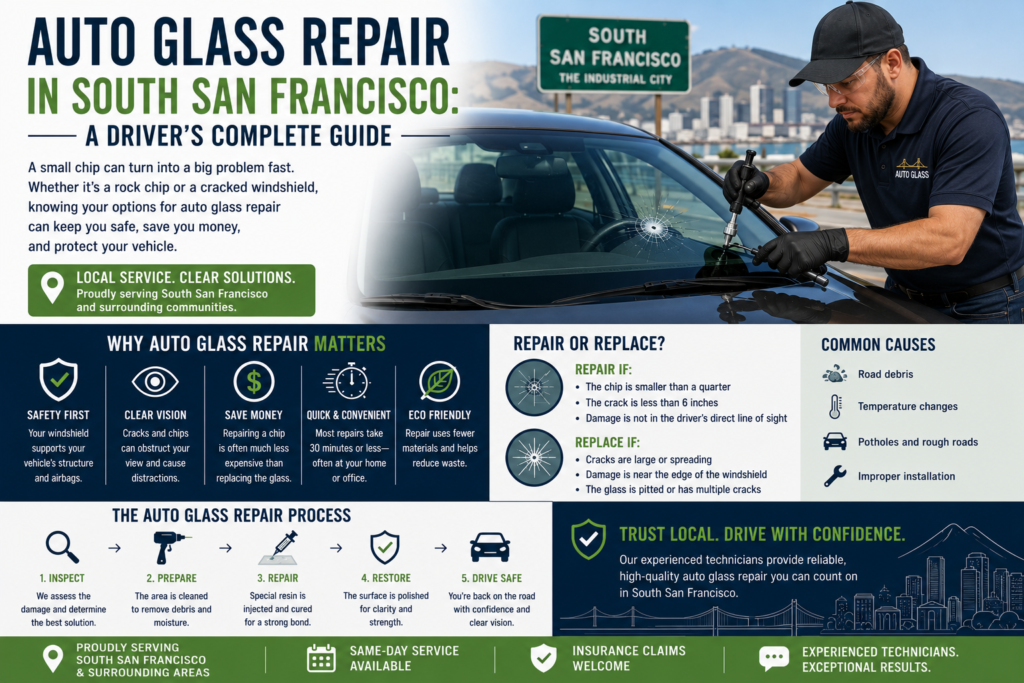
When a South San Francisco driver brings a chipped windshield for repair, the process follows a consistent professional protocol. The technician first assesses the damage to confirm it is repairable typically chips under an inch in diameter and cracks shorter than six inches that haven’t penetrated through to the inner glass layer. The damaged area is cleaned to remove any dirt or moisture. A drill creates a small relief point if needed at the end of a crack. A specialized injector tool creates a vacuum to remove air from the break, then forces UV-curable resin into the void. The resin is cured under UV light and polished to restore optical clarity.
Driving Near SFO: Glass Considerations for Airport-Area Drivers
Residents and workers near SFO face some specific auto glass considerations. Aircraft engine exhaust and jet blast can leave residue on vehicle surfaces, including windshields, which can affect visibility and wiper performance over time. Overnight parking near the airport can expose vehicles to significant temperature swings particularly in South San Francisco’s foggy mornings and warmer afternoons that stress existing glass damage. Drivers who regularly park near airport areas are wise to inspect their windshields for developing cracks more frequently than drivers in inland areas.
How Weather Affects Auto Glass in South San Francisco
South San Francisco’s coastal microclimate produces dense morning fog, cool temperatures, and strong afternoon winds particularly in summer. This environment has direct implications for auto glass. Fog introduces persistent surface moisture that can penetrate windshield chips, causing the water to freeze and expand during cold nights (though freezing is rare here), or simply to prevent resin from curing properly if a repair is attempted while the glass is wet. Strong winds carrying salt air and particulates can accelerate glass surface degradation over time. Wipers working against gritty, salt-laden surfaces contribute to windshield micro-scratches.
What Happens If You Drive With a Cracked Windshield?
California law prohibits operating a vehicle with a windshield that is damaged in a way that obstructs the driver’s clear view of the road. Beyond the legal risk, driving with a cracked windshield creates genuine safety hazards. Cracks in the driver’s sightline reduce visibility, especially in low-light or glare conditions. A structurally compromised windshield may fail to perform its critical role in airbag deployment or roof crush resistance. And in South San Francisco’s busy traffic environment, reduced visibility from windshield damage increases accident risk.
Window Tint and Auto Glass: What South San Francisco Drivers Should Know
Many vehicles in South San Francisco have factory or aftermarket window tint on side and rear windows. When these windows require replacement, matching the tint is an important consideration. Factory tint is built into the glass itself and cannot be replicated with film replacement glass may come with or without built-in tint. Aftermarket tint film applied to replacement glass should comply with California’s window tint laws, which permit front side windows to have a minimum of 70% light transmittance and place no restrictions on rear side or rear window tint on non-commercial vehicles.
The Value of Mobile Auto Glass Service for South SF Workers
South San Francisco is home to major biotech campuses, commercial warehouses, and industrial facilities where workers often can’t easily leave during work hours for vehicle repairs. Mobile auto glass services which bring a technician directly to a vehicle’s location are therefore especially valuable in this community. Chip repairs completed during a lunch break or a windshield replacement done in the company parking lot while the owner works eliminates the need to take time off or arrange transportation. For complex replacements or ADAS recalibrations, shop visits may still be required.
Conclusion
Auto glass repair in South San Francisco reflects the city’s industrial character, busy highways, and coastal climate all of which create unique demands on vehicle glass. Addressing damage promptly and working with experienced, properly equipped technicians ensures safety and prevents minor damage from becoming major expense.