Storage for Spare Parts in Saudi Arabia: A 2026 Buyer’s Guide
Smart logistics teams know that reliable Storage for Spare Parts is the quiet engine behind uptime. When a critical pump bearing or HVAC compressor fails, the component you need must be on a shelf, labeled, and ready to ship within hours. In 2026, Saudi operators across oil and gas, manufacturing, and facilities management are rethinking how they warehouse parts to cut downtime and protect margins.
This guide breaks down what world-class spare parts storage looks like, how to choose a provider, and the mistakes that cost fleets real money. We draw on first-hand warehouse operations experience to give you practical, actionable steps.
Why Does Storage for Spare Parts Matter So Much?
Spare parts are expensive insurance. A single idle production line can burn tens of thousands of riyals per hour. The faster you retrieve the correct part, the smaller that loss. Yet many firms still pile components into a back room with no climate control, no barcoding, and no clear ownership.
Dedicated storage solves three problems at once. It protects parts from heat, humidity, and dust. It creates a searchable inventory so nothing gets lost. And it frees up valuable floor space inside your own plant for production rather than clutter.
- Downtime reduction: Fast retrieval means faster repairs.
- Asset protection: Controlled environments stop corrosion and seal degradation.
- Cost control: Accurate counts end over-ordering and emergency freight.
- Compliance: Traceable records support audits and warranty claims.
What Separates Good Spare Parts Warehousing From the Rest
Not all facilities are equal. The best providers combine engineering discipline with genuine logistics skill. Here is what we look for when we audit a site.
Climate and condition control
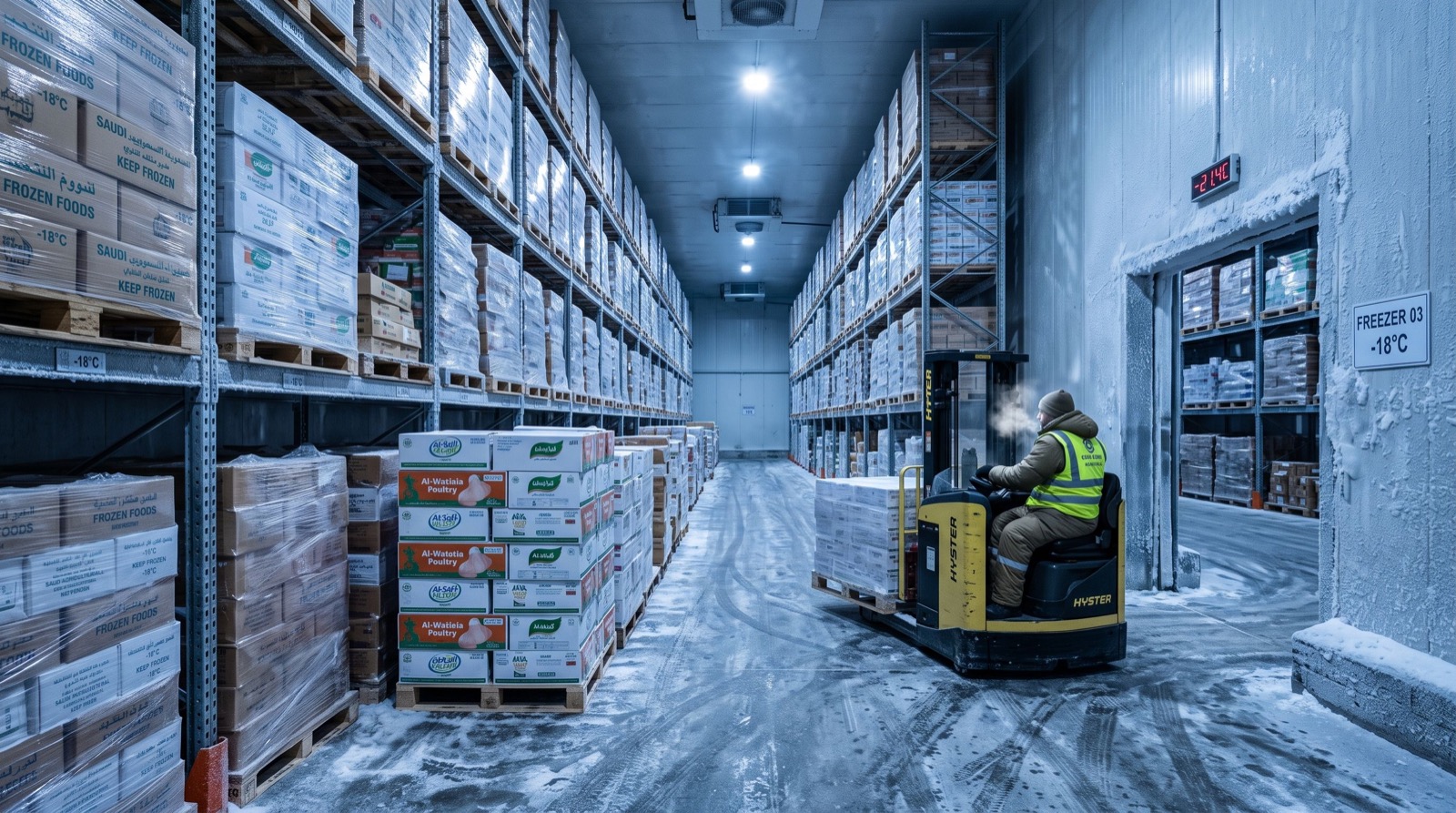
Electronic boards, rubber seals, and precision metals all degrade in the wrong conditions. Humidity above 60% invites corrosion, while extreme heat cracks gaskets. Temperature-stable zones keep sensitive components within manufacturer tolerances. For temperature-critical items, pairing parts storage with professional Chilled Storage in Jeddah keeps lubricants, adhesives, and calibrated instruments inside spec.
Inventory technology
Barcoding and a modern warehouse management system turn a pile of boxes into a real-time database. You should be able to check stock from your phone and know exactly which shelf holds the part.
Security and access
High-value parts attract theft. CCTV, controlled access, and logged pick events protect your assets and your accountability trail.
How to Choose the Right Storage Partner
Picking a provider is a commercial decision as much as a technical one. Follow this sequence to avoid regret.
- Map your parts profile. List quantities, sizes, weights, and sensitivity.
- Define service levels. How fast must a part leave the dock after you order it?
- Inspect the facility. Visit in person; check cleanliness, racking, and climate logs.
- Test the system. Run a trial order and measure the real retrieval time.
- Review the contract. Confirm liability, insurance, and exit terms before signing.
Working with established quality service providers often beats building in-house capacity, because specialists already own the racking, software, and trained staff.
Storage Conditions by Part Type
Different components demand different environments. Use this quick reference to match parts to the right zone.
| Part Type | Ideal Temperature | Humidity | Key Risk |
|---|---|---|---|
| Electronic control boards | 15-25 degrees C | Below 50% | Static and corrosion |
| Rubber seals and gaskets | 10-20 degrees C | 40-60% | Cracking and ozone damage |
| Bearings and precision metals | 18-24 degrees C | Below 45% | Rust and pitting |
| Lubricants and adhesives | 5-15 degrees C | Controlled | Separation and curing |
A Practical Tip From the Warehouse Floor
Here is an original insight we have proven on site: apply the ABC method to your spare parts. Classify “A” items as mission-critical and store them at the front with duplicate stock. Put slow-moving “C” items deeper in the racks. This single change often cuts average pick time by a third without adding headcount.
Pair that with a minimum-maximum reorder rule and your emergency freight bills shrink fast. According to guidance from the U.S. Occupational Safety and Health Administration, organized racking and clear aisles also cut accident rates, which protects both staff and stock.
Common Mistakes to Avoid in 2026
- Storing sensitive parts in uncontrolled rooms to save a few riyals.
- Relying on spreadsheets instead of a live inventory system.
- Ignoring shelf-life dates on seals, batteries, and chemicals.
- Failing to label parts with manufacturer codes and locations.
Each of these errors turns a cheap problem into an expensive one. Industry research referenced by the U.S. Department of Energy shows that structured maintenance and parts programs meaningfully reduce unplanned downtime across manufacturing plants.
Integrating Spare Parts Storage With Maintenance Planning
Storage works best when it talks to your maintenance schedule. If your planned-maintenance calendar knows which parts sit on which shelf, technicians stop improvising and start executing. That link between the warehouse and the workshop is where the biggest savings hide.
Start by sharing your preventive-maintenance plan with your storage partner. When they can see that twelve compressors are due for seal replacement next quarter, they can pre-stage those kits and flag any low stock weeks in advance. The result is fewer last-minute panics and almost no express freight.
Consignment arrangements push this further. Under consignment, the provider holds critical parts on their shelves but you only pay when you actually consume an item. Your cash stays in the bank while the safety stock sits ready. For Saudi operators juggling long import lead times, this model smooths out the bumps that shipping delays create.
Finally, insist on monthly reporting. A short dashboard showing stock levels, pick times, and slow-moving items turns raw storage into genuine intelligence. Over a year, that data tells you which parts to stock deeper and which to let go, trimming carrying cost without raising downtime risk.
Frequently Asked Questions
What is the best way to organize storage for spare parts?
Use the ABC classification to prioritize critical parts up front, barcode every item, and record its exact shelf location in a warehouse management system so retrieval stays fast and accurate.
Do spare parts really need climate control?
Many do. Electronics, rubber seals, and lubricated components degrade in heat and humidity. A controlled environment extends usable life and protects your warranty coverage.
Should I outsource spare parts storage or keep it in-house?
Outsourcing to a specialist usually wins when you lack the space, software, or trained staff. Providers already own the racking and systems, so you pay only for the capacity you use.
How fast should a part be available after I order it?
For critical items, same-day or next-hour dispatch is the goal. Agree on a written service level with your provider and test it with a trial order before you commit.
Conclusion
Reliable storage for spare parts is not a cost center; it is a competitive advantage. The right environment, smart inventory technology, and a disciplined classification system keep your operations running while rivals scramble for emergency shipments. Start by auditing your current setup against the table above, then partner with a specialist who can guarantee the retrieval speed your business depends on in 2026 and beyond.